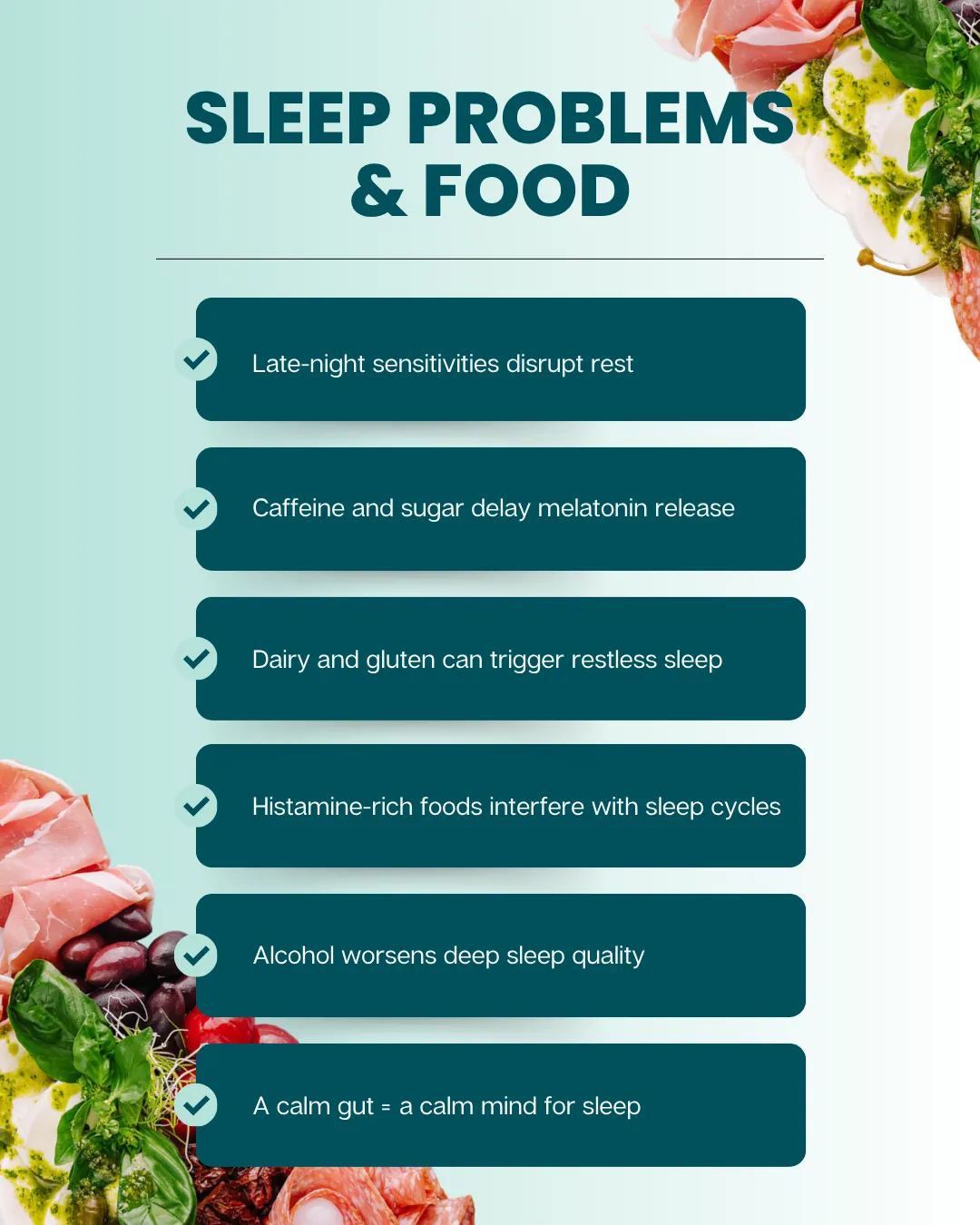
Foods Impact Sleep: Tips for Restful Nights
Understanding How Foods Impact Sleep: Tips for Restful Nights
Good sleep is essential for everyone. It helps with growth, concentration, and feeling refreshed. However, not everyone finds it easy to get a good night's sleep. One significant factor impacting sleep is the food we eat. Certain foods can either help us rest better or make sleep elusive. Let's explore how different foods impact sleep and discover ways to enjoy restful nights.
The Connection Between Food and Sleep
Food can influence the quality of our sleep in various ways. Here are some common connections:
- Late-night sensitivities disrupt rest: Eating certain foods late at night can lead to discomfort, potentially disrupting sleep. It's important to recognize sensitivities to specific foods, which can cause disturbances.
- Caffeine and sugar delay melatonin release: Caffeine, found in coffee, tea, and chocolate, is a well-known stimulant that can keep you awake. Sugar also affects how the body releases melatonin, the sleep hormone, making it harder to fall asleep promptly.
- Dairy and gluten trigger restless sleep: Some individuals might experience trouble sleeping due to sensitivities or intolerances to dairy and gluten. These foods can lead to indigestion and restlessness during the night.
Foods That May Disrupt Sleep Cycles
Continuing with foods that are potential culprits in disrupting a peaceful night’s sleep, the following might interfere with sleep cycles:
- Histamine-rich foods interfere with sleep cycles: Foods like aged cheese, fermented products, and processed meats contain high amounts of histamines, which can cause alertness, interfering with sleep.
- Alcohol worsens deep sleep quality: While alcohol might make you feel sleepy at first, it adversely impacts the quality of deep sleep, causing you to wake up feeling tired.
Creating a Calm Environment with Diet
A calm gut = a calm mind for sleep. Our digestive health is closely linked to how we sleep. A calm, well-nourished digestive system can lead to a restful mind and a peaceful night. Here are some steps you can take:
- Opt for light, early dinners: Eating a lighter meal in the evenings—preferably a few hours before bed—can make falling asleep easier. This approach helps the body enter a restful state.
- Include sleep-supporting foods: Foods high in magnesium and tryptophan, such as nuts, seeds, and whole grains, support sleep.
- Avoid stimulants in the afternoon: Limiting caffeine and sugar intake after midday can improve the chances of a sound sleep.
- Stay hydrated: Drinking enough water throughout the day can help digestion and promote better sleep. However, it's wise to reduce intake before bed to avoid waking up during the night.
Listening to Your Body
Everyone's body reacts differently to food. Understanding signals from your body can help you identify foods that might disturb your sleep.
- Keep a food diary: Tracking what you eat and how you sleep can reveal patterns.
- Test exclusions: Try eliminating potential culprits like caffeine, gluten, or dairy to see if sleep improves.
Sleep is essential for well-being. By understanding the connection between food and sleep, making mindful choices can lead to improved sleep quality. Consider adjusting your diet, listening to your body, and noting the changes. A few simple steps might be all it takes to enjoy restful and refreshing nights.